When someone calls your business, how do you know where they found your phone number? Was it from your Google ad, your Facebook post, or that billboard on Main Street? TrackNotion helps you answer this question by providing special tracking phone numbers that reveal exactly where each call originated.
One of the core features of TrackNotion is its ability to simplify call tracking and deliver highly accurate attribution data (knowing which marketing effort caused someone to call you).
We offer two primary strategies, ensuring you can track everything from a single print ad to complex digital campaigns:
- Static Placements (Simple Tracking): Ideal for single-source, offline marketing like billboards or flyers.
- Dynamic Placements (Advanced Attribution): Essential for connecting calls back to specific digital sources, keywords, and ads (e.g., Google Ads, Facebook).
To get the most out of the platform and fully optimize your budget, it is important to understand the different approaches and determine which one best suits your specific needs.
What this page contains:
- Why Tracking Matters
- The benefits of tracking your campaigns with TrackNotion
- Static Placements (Single Number Tracking)
- Dynamic Placements (Multiple Number Tracking)
- Which one is right for you?
1. Why Tracking Matters
Phone calls remain one of the highest-value conversions for businesses, often indicating a customer ready to purchase or book a service. Without accurate call tracking, you are essentially flying blind.
Understanding the origin of your calls is critical for two main reasons:
1. Accurate Budget Optimization
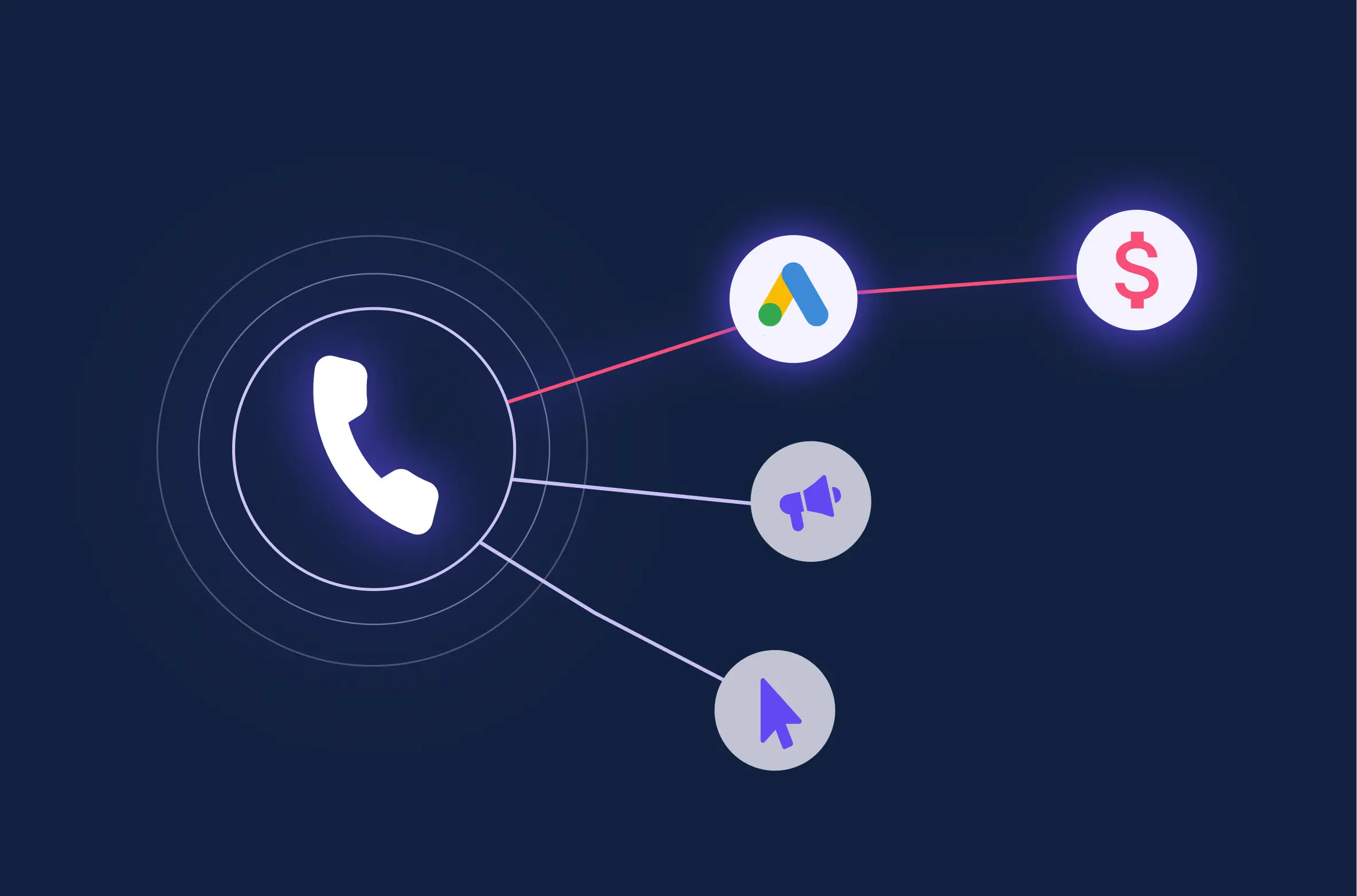
- Stop Wasting Money: If you are spending thousands on ads but don't know which specific ad or keyword drove the inbound calls, you risk continuing to fund channels that are generating zero results.
- Scale Success: When you know that calls from Google Ads lead to 50% more revenue than calls from social media, you can confidently shift your budget to the proven, high-performing sources. This directly impacts your Return on Investment (ROI).
- Prevent False Attribution: Do you rely on asking callers, "How did you hear about us?" This method is notoriously unreliable. Accurate tracking provides verifiable data, eliminating guesswork and human error.
2. Full Customer Journey View
- Digital Blind Spot: Even if a customer clicked your ad, browsed your site, and then picked up the phone, your digital analytics (like Google Analytics) will often lose the trail once the call is placed. Call tracking stitches this journey back together.
- Qualify Leads: Tracking doesn't just tell you where the call came from; when combined with features like call recording and AI transcription (available in TrackNotion), you gain insight into the quality of the leads driven by specific ads. This reveals the true value of your marketing efforts.
In short: If you can't measure your calls, you can't manage your marketing budget effectively.
TrackNotion offers two powerful methods for tracking inbound calls: Static Placements and Dynamic Placement.. Before we dive into the implementation, here’s a simple way of looking at it. In this example, we’re in charge of a simple appointment-based business:
Static Placements
- It's like: Giving every single person who calls your business the exact same phone number: (555) 123-4567.
- What you learn: You know how many calls your office receives in total, but you have no idea if the person saw your ad in the local paper, saw your TV commercial, or found you on Google.
Dynamic Placements
- It's like: Giving a receptionist a stack of unique, temporary appointment cards to hand out. The card you give a person has their source written on the back: "Came from Facebook Ad - Promo A."
- What you learn: Every single caller is shown a unique, temporary phone number. When they call it, the system instantly reads the "back of the card" to tell you: "This call came specifically from the Facebook video ad run last Friday."
2. Static Placements (Single Number Tracking)
Level: Beginner
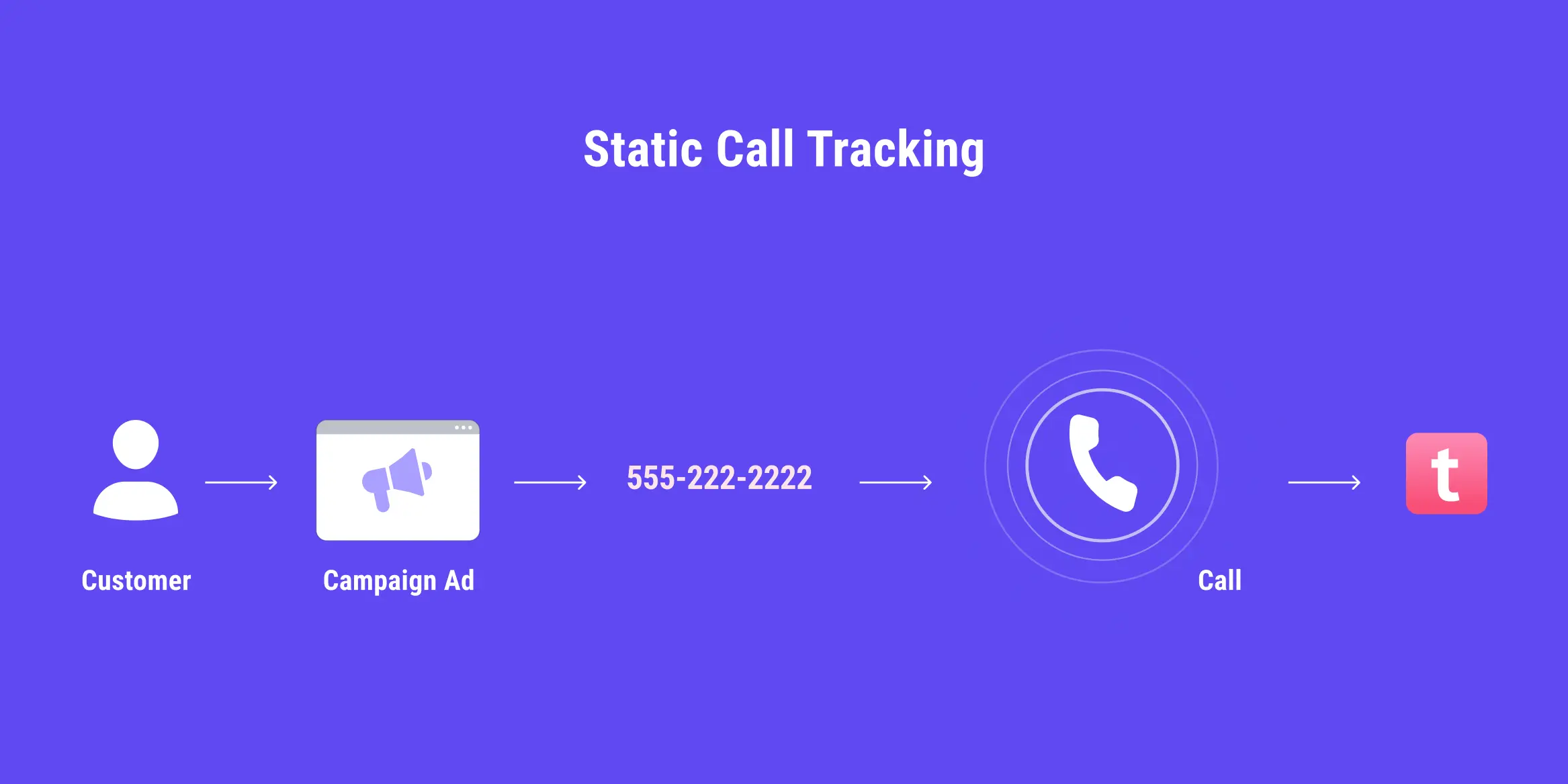
This straightforward approach is perfect for situations where there is a single point of marketing and one contact number associated with it. With this type of campaign, TrackNotion will issue you a unique phone number to place on all your marketing collateral.
Key Benefits
- Ease of Setup: As soon as you create a campaign in TrackNotion, you can select Static Placements. It's as simple as entering the provided number and placing it on your collateral.
- Easy Tracking: Quickly see the total number of calls generated by your marketing materials directly from the TrackNotion Campaign Overview dashboard.
- Full Feature Access: You retain access to all of TrackNotion’s powerful features, including call recording, AI transcribing, call grading, and much more.
Important Limitation
Static Placements are designed for single-source tracking. If you run a campaign with multiple touchpoints (e.g., a billboard, a TV ad, and a flyer) all pointing to this single number, determining which source generated a specific call (attribution) will be exceedingly difficult. This is the goal of Dynamic Placements, which we will cover next.
3. Dynamic Placements (Multiple Number Tracking)
Level: Intermediate - Expert
While Static Placements are simple and great for print or single-channel campaigns, they are less useful when you start running digital ads.
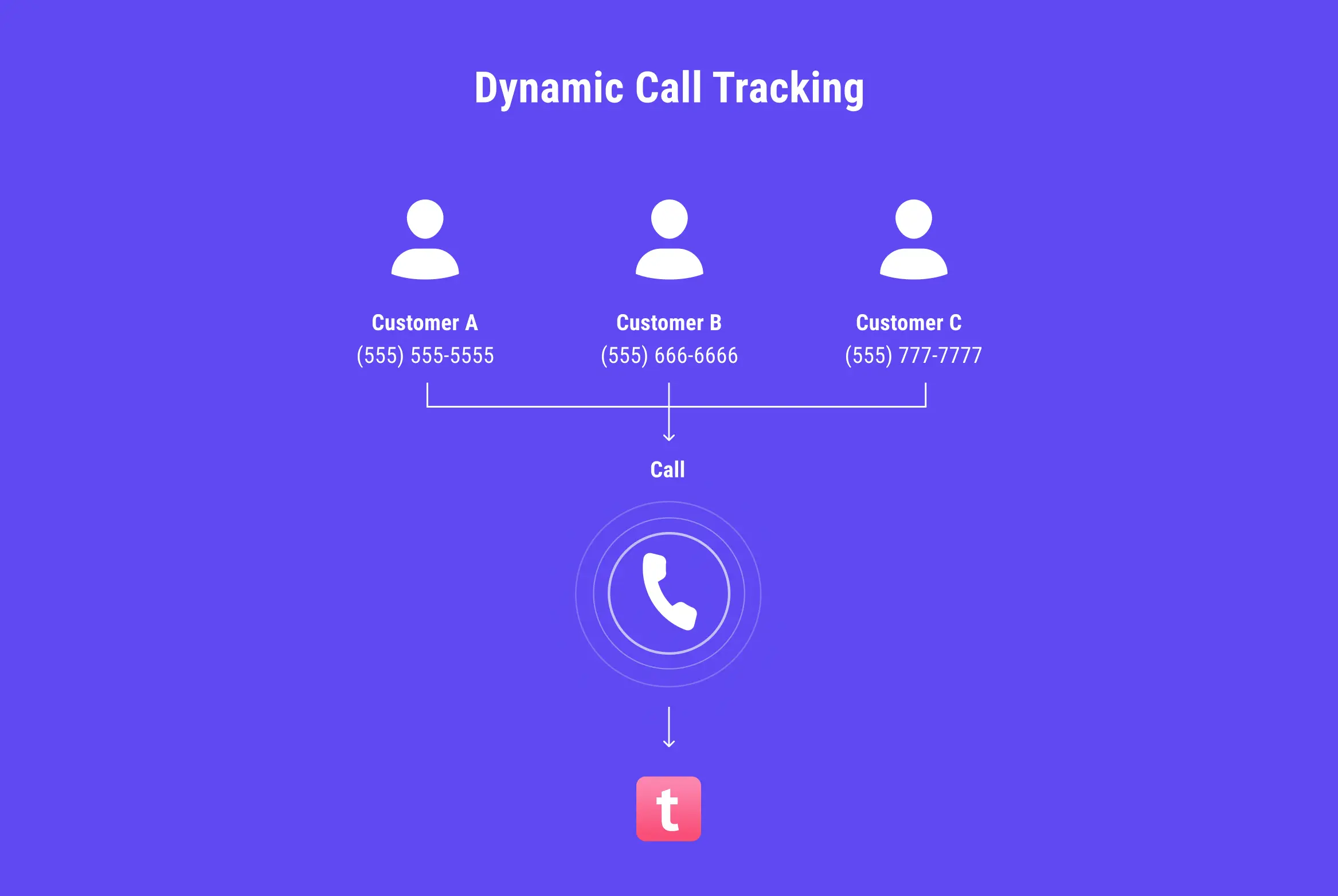
Dynamic Ad Placements solve this by using technology to read the visitor's digital "fingerprint" and instantly assign a unique tracking number from a Number Pool. When the user calls that number, TrackNotion already knows the call must be attributed to that specific Facebook campaign or that specific Google search keyword.
This feature moves you from general campaign performance reporting to detailed marketing optimization.
Key Benefits
- Accurate, Granular Attribution: You know exactly which ad, placement, keyword, or content drove the call (e.g., Source: Facebook, Campaign: summer_promo), instead of just the general campaign.
- Calculate True ROAS (Return on Advertising Spend): Calls are tracked as conversions and tied directly to your digital ad data, giving you the precise metrics needed to optimize your marketing budget.
- Single Number for Multiple Sources: You only need one core phone number on your website. The Dynamic Number Insertion (DNI) script automatically swaps it out with a unique tracking number based on the visitor's source data (UTM tags).
- Compatibility with Paid Search: The system integrates seamlessly with native ad platform tracking features, such as Google’s ValueTrack parameters, ensuring calls from high-value sources, like Google Ads, are attributed down to the keyword level.
- Clean Data Collection: Data is collected reliably by assigning a unique tracking number to each visitor's session, eliminating reliance on self-reported information from callers.
4. Which one is right for you?
Choose Static Placements if:
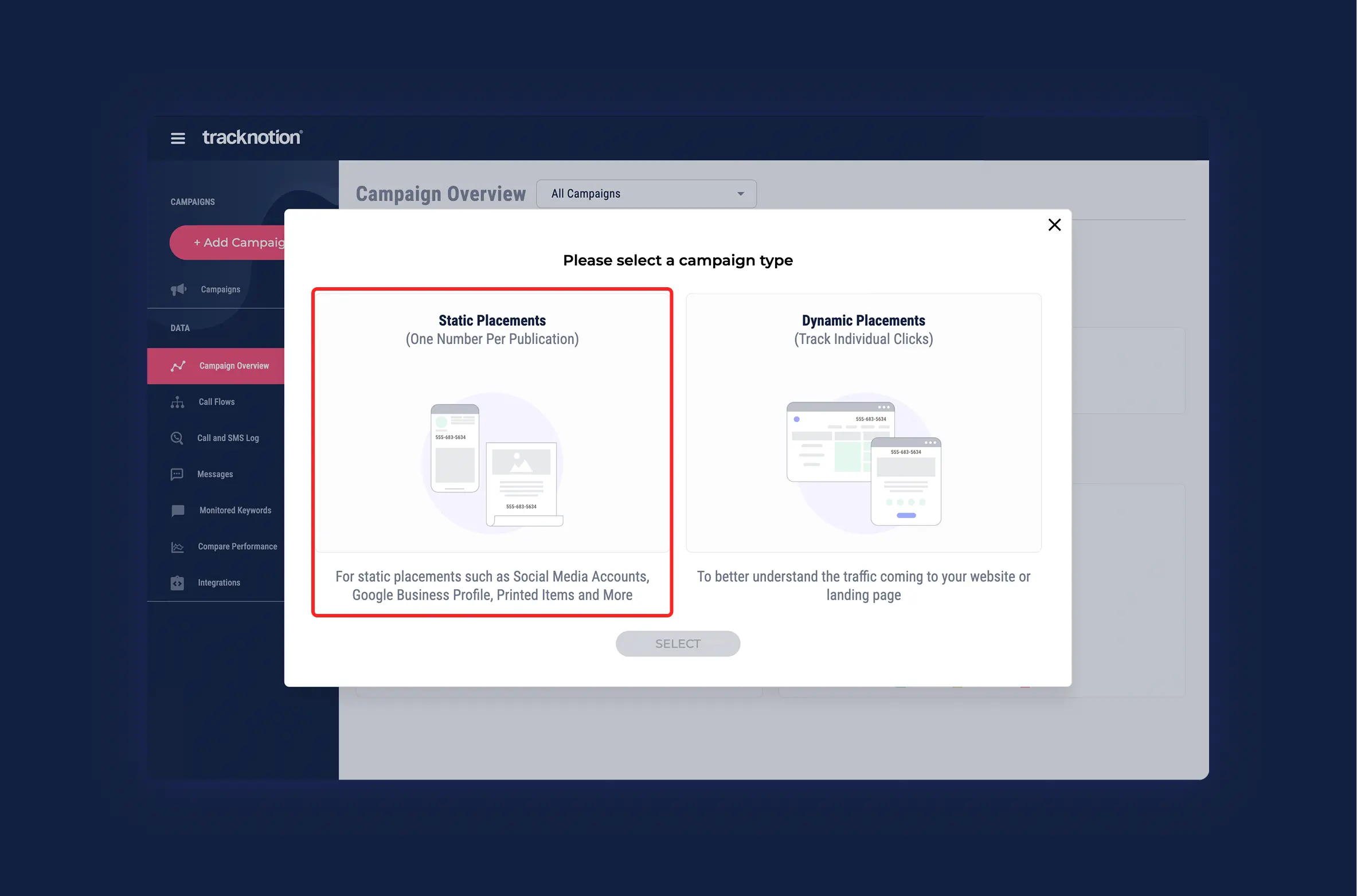
Static Placements are ideal when simplicity, ease of setup, and clear channel separation are your main goals.
- Your advertising is purely physical/offline: You primarily use marketing collateral like billboards, radio ads, print magazines, or TV commercials.
- You use only one phone number for one specific, measurable campaign (e.g., a postcard mailer).
- You do not require granular attribution: You are satisfied knowing the total call volume generated by that specific marketing material, without needing to know who called or what keyword they searched.
- You are a beginner and want the absolute fastest, easiest setup.
Goal: Measure total call volume for a single, easily identifiable source.
Choose Dynamic Placements if:
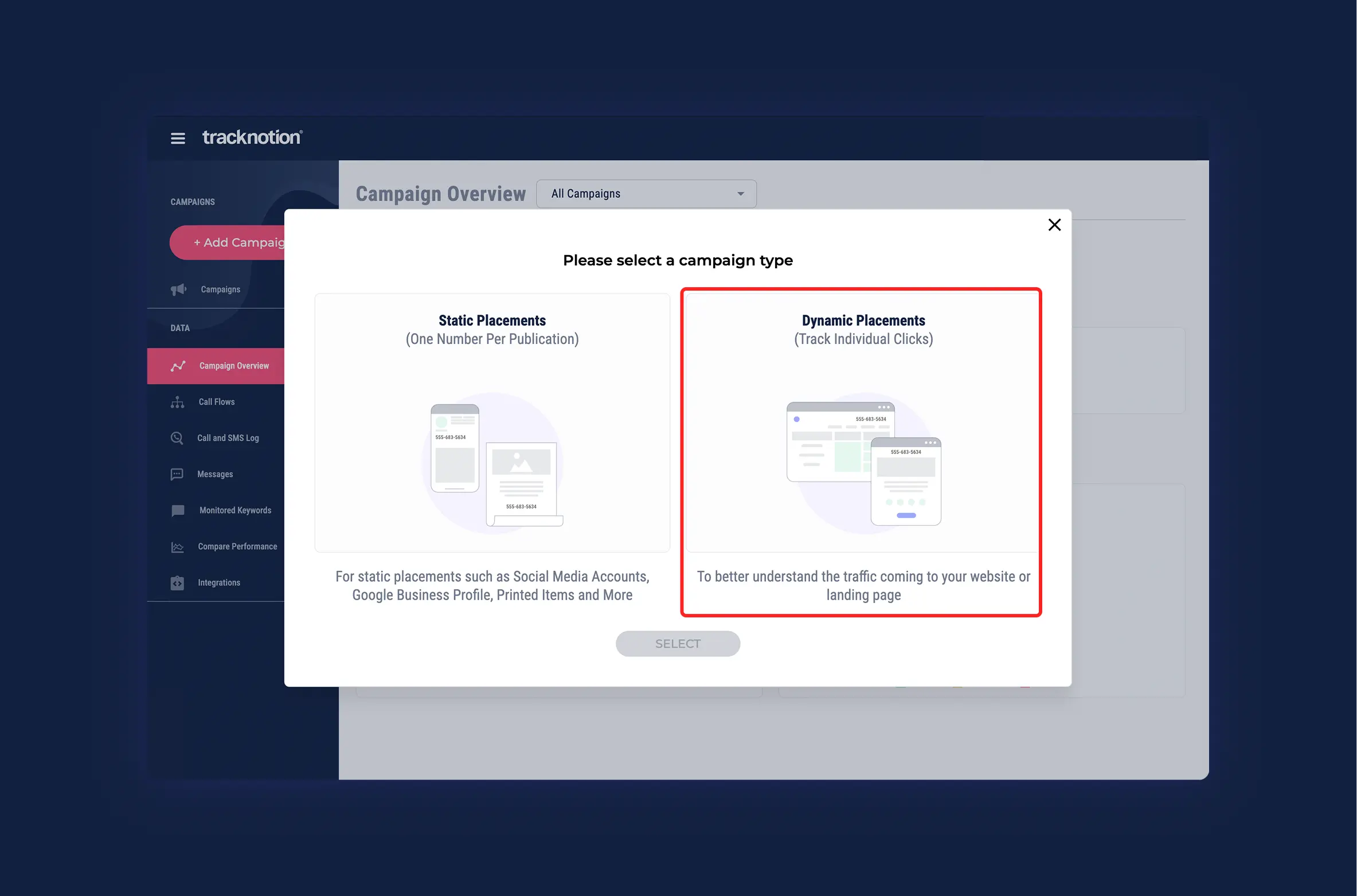
Dynamic Placements are essential for modern digital marketing and accurate optimization.
- You run any form of digital advertising, including Google Ads (PPC), Facebook Ads, display campaigns, or LinkedIn Ads.
- You need to calculate accurate ROAS (Return on Advertising Spend): You must connect phone calls directly back to the specific keywords or ad creative that generated them.
- You have multiple marketing sources (e.g., email, paid social, organic search) driving traffic to the same landing pages.
- You are serious about marketing optimization: You need granular data to justify spending, pause ineffective ads, and scale successful campaigns.
If you’re interested in understanding the technical aspects of setting up tracking for your Dynamic Placements campaign, you can read this article.
Ready to get started? Create your first campaign in TrackNotion and choose either Static or Dynamic Placements. You can always add more campaigns later as your needs grow.
If you need any further information or you’re struggling to set up your TrackNotion campaign, feel free to reach out to us using the form below.