
Most dental marketing advice focuses on one thing: getting more leads.
More traffic.
More clicks.
More calls.
But here’s what often gets missed:
Many dental practices aren’t struggling to generate leads, they’re struggling to convert them.
A patient finds your practice online, does their research, and decides to call.
What happens next determines whether they book… or move on to the next practice.

Why Dental Practices Lose Patients After the First Call
If you’re investing in SEO, Google Ads, or social media marketing, your phone should already be ringing.
But in many practices, there’s a gap between incoming calls and actual booked appointments.
Common issues include:
- Calls going unanswered during busy periods
- Patients being placed on hold and not returning
- Inconsistent handling of pricing or treatment questions
- No follow-up on missed calls
- Limited visibility into how front desk staff manage enquiries
These aren’t unusual problems, they’re just usually invisible.
The Role of Phone Calls in Dental Lead Generation
Even as online booking becomes more common, phone calls remain a critical step in the patient journey.
Patients often call when:
- They’re ready to book
- They have questions about treatment or pricing
- They’re comparing multiple practices
That means your phone isn’t just an admin tool, it’s a core part of your conversion process.
If calls aren’t handled effectively, your marketing performance suffers, no matter how many leads you generate.
Why Traditional Lead Tracking Falls Short
Most dental practices track:
- Website visits
- Ad clicks
- Form submissions
But these metrics only tell part of the story.
They don’t show:
- Which calls turned into appointments
- Which marketing channels are driving real conversations
- Where potential patients drop off during the booking process
Without that visibility, it’s difficult to:
- Optimise marketing spend
- Improve front desk performance
- Accurately measure return on investment
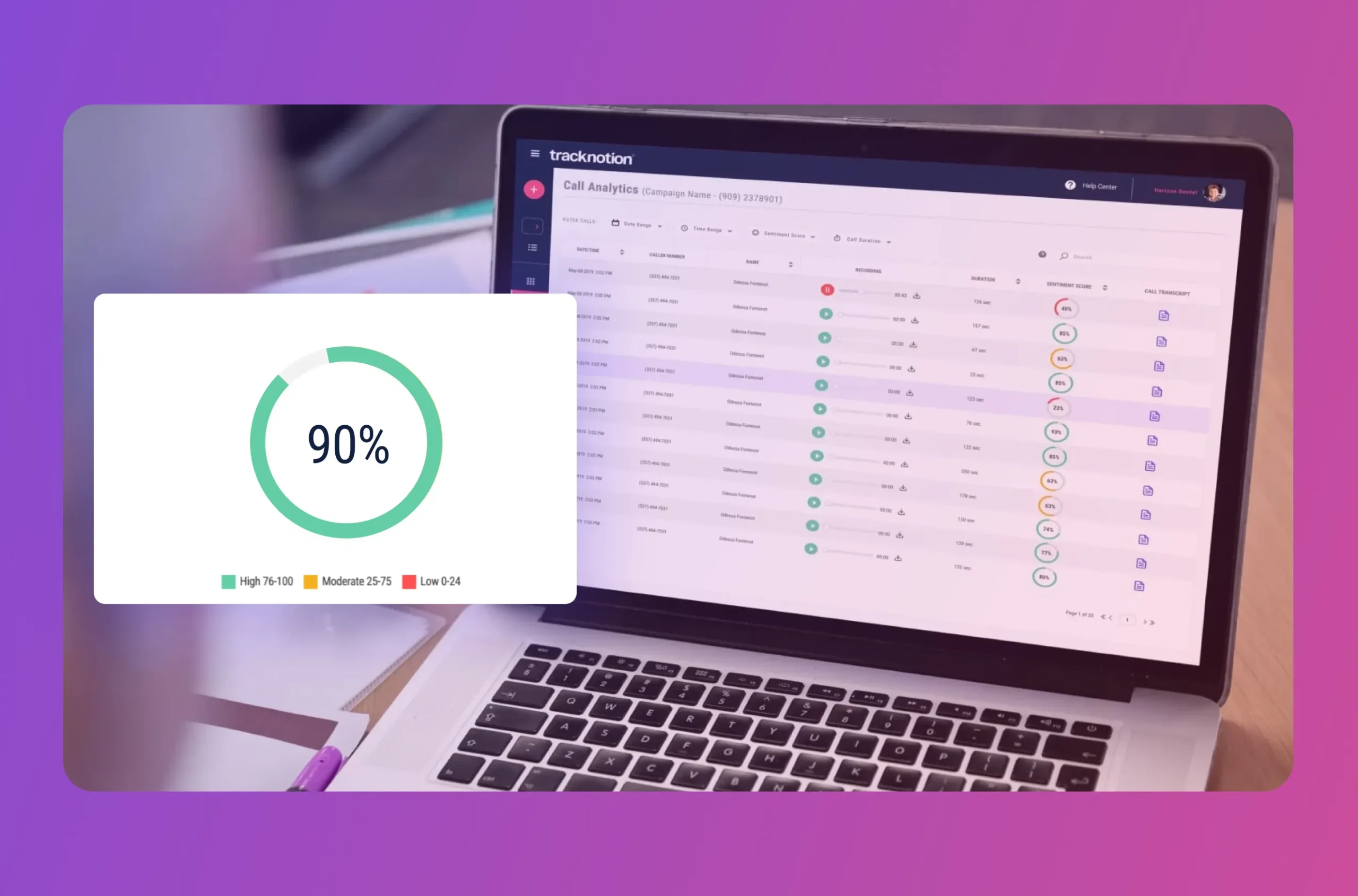
Call Tracking Software for Dental Practices: What Actually Matters
Call tracking software is often positioned as a marketing tool, but for dental practices, it plays a much broader role.
The goal isn’t just to track calls.
It’s to understand what’s happening during and after those calls.
Key capabilities to look for include:
- Call attribution
Understand which campaigns, keywords, or channels are generating phone inquiries - Call recording and transcription
Review real conversations to identify patterns, gaps, and opportunities - Missed call tracking and alerts
Ensure potential patients aren’t lost due to unanswered calls - Call quality monitoring
Evaluate how effectively your team handles inquiries and booking conversations - Centralized communication (calls and messages)
Keep all patient interactions in one place for better follow-up and coordination
How TrackNotion Helps Dental Practices Improve Conversion
Platforms like TrackNotion are designed to give practices visibility into one of the most important parts of their workflow: phone conversations.
With TrackNotion, dental practices can:
Understand which marketing efforts drive real patient inquiries
Track call sources using unique numbers, so you can see which campaigns and channels are generating actual conversations, not just clicks.
Review and learn from real patient interactions
AI-powered transcription highlights key moments in calls, making it easier to identify trends, common objections, and missed opportunities.
Improve front desk performance
Call grading and quality monitoring help standardize how inquiries are handled, making it easier to train staff and improve booking rates over time.
Respond faster to missed opportunities
Automatic alerts ensure missed calls can be followed up quickly, reducing the number of lost patients.
Keep communication organized
With integrated text messaging and multi-user access, teams can manage patient communication more effectively without losing context.
From More Leads to Better Outcomes
One of the most common assumptions in dental marketing is:
“If we want more patients, we need more leads.”
But in many cases, growth comes from improving what already exists.
For example:
- A practice receiving consistent call volume may still have low booking rates
- Small improvements in call handling can significantly increase conversions
- Better follow-up on missed calls can recover otherwise lost revenue
This shift, from generating more leads to converting them more effectively, often directly impacts profitability.
A More Practical Approach to Dental Marketing
Instead of focusing only on traffic and lead volume, a more complete strategy looks at the full patient journey:
- Visibility – Are patients finding your practice online?
- Engagement – Are they reaching out (calls, forms, messages)?
- Conversion – Are those inquiries turning into booked appointments?
Most practices invest heavily in the first two.
The third is where many opportunities are lost.
Conclusion: Measure What Actually Drives Patients
Dental lead generation is important, but it’s only part of the equation.
If your practice is already receiving calls, the next step isn’t necessarily more marketing.
It’s understanding:
- What’s happening on those calls
- Where patients are dropping off
- How your team is handling inquiries
With the right visibility, you can make informed improvements that directly impact bookings, patient experience, and revenue.
See How TrackNotion Works
TrackNotion helps dental practices connect marketing activity to real patient conversations, so you can understand what’s working, identify gaps, and improve how inquiries turn into appointments.